

close
Choose Your Site
Global
Social Media


Views: 0 Author: Site Editor Publish Time: 2026-04-17 Origin: Site


Some fabrics are chosen only for color, but Bazin Shadda carries more than surface appeal. People search for its background because they want to understand what gives it such a strong presence in West African dress and why it continues to matter in fashion today. That history still shapes how the fabric is worn, how it is valued, and how it is presented in modern collections. For Kingsen International, a manufacturer and supplier founded in 2011 with operations in China and Nigeria, that cultural depth is part of what makes Bazin Shadda more meaningful than an ordinary dress fabric.
Bazin Shadda is closely tied to West African dress culture, especially in settings where clothing is expected to carry dignity, ceremony, and visual impact. Across the region, bazin has long been associated with formal garments worn for weddings, naming ceremonies, religious celebrations, and major family events. It is widely recognized as a glossy cotton damask fabric with a polished appearance, and that combination of structure and shine helped it become a natural fit for clothing meant to stand out in public life.
Its story is often told through West Africa rather than through one narrow point of origin because the fabric gained meaning through use, tailoring, dyeing, and social tradition across several markets. Over time, bazin became much more than cloth. It became part of the language of elegance. A finished garment made with this fabric could signal respect for an occasion, attention to appearance, and connection to local style values. That is one reason why people asking about Bazin Shadda origin are usually asking more than a history question. They are also asking why this fabric still feels important today.
For a company such as Kingsen International, this background matters because product value is stronger when customers understand what the fabric represents. Kingsen’s own positioning of Bazin Shadda emphasizes luxurious luster, rich color, and use in traditional dresses and celebration clothing, which fits naturally with the long-standing role of the fabric in ceremonial wear.
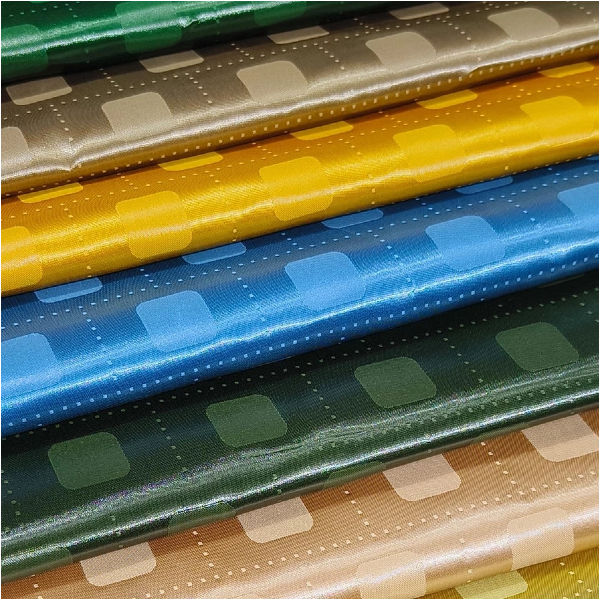
One reason Bazin Shadda became visually distinctive is its finish. The polished surface, firm body, and vivid color effect made it easy to recognize even from a distance. In many West African markets, that finish became linked with dressing well for important occasions. A garment made from a fabric with strong sheen and clear presence could communicate festivity, pride, and refinement before a single word was spoken. Sources describing bazin commonly note that its shine comes from dyeing, starching, polishing, and finishing processes that transform cotton damask into something far more striking than ordinary cloth.
That visual identity also helps explain why Bazin Shadda remains commercially attractive today. Fabrics that instantly read as special are easier to position in markets that value celebration wear, formal robes, and statement garments. This is where cultural history and market demand meet. The look that gave bazin a place in traditional wardrobes is the same look that keeps it relevant for modern fashion collections.
Many traditional fabrics become limited to heritage display. Bazin Shadda moved in a different direction. It stayed active in real wardrobes because it adapted well to changing styles while keeping its formal character. It could be tailored into classic flowing garments, richly embroidered outfits, structured robes, or more updated silhouettes without losing its identity. That flexibility helped it remain useful across generations.
Its survival is also tied to the fact that it belongs to living fashion culture rather than museum culture. In many communities, it is still linked to events where appearance matters. When a textile continues to appear at weddings, festive gatherings, and religious celebrations, it keeps renewing its place in public life. That ongoing visibility allows the fabric to travel into newer fashion directions without losing its cultural roots.
For product communication, this is important. Customers do not only want a fabric that looks impressive. Many also want one that already carries social meaning. Kingsen International’s Bazin Shadda range speaks directly to that demand by offering fabrics that work for both traditional clothing and high-visibility dresswear aimed at current market tastes.
Senegal is one of the markets most strongly associated with bazin’s ceremonial image. There, the fabric is closely linked with elegant boubous and occasion dressing, especially where embroidery, color richness, and polished presentation matter. In this setting, the fabric is not only worn. It is displayed. The shine, volume, and finish all help build an impression of prestige. That is one reason bazin became so closely identified with formal style in the wider region.
This ceremonial role influences how people judge the fabric even now. When a customer sees Bazin Shadda, they often expect it to carry some degree of dignity and visual weight. The product is therefore judged not only by softness or color, but also by whether it can support an outfit that looks worthy of an important moment.
The same fabric category does not appear in exactly the same way everywhere. In Mali, bazin has long had a strong place in formal dress, with polished cotton fabric widely worn for important occasions. In Guinea and Nigeria, the fabric can take on different styling expressions depending on tailoring habits, embroidery preferences, and local fashion taste. Across the wider West African region, bazin remains connected to celebration, elegance, and high-visibility dressing, even though each market may interpret those values in its own way.
That regional variation is one reason the fabric continues to attract global interest. It is recognizable enough to carry a strong identity, yet flexible enough to be reworked for different collections and customer groups. For international fabric promotion, that balance is valuable. It allows a supplier to present the material as culturally grounded while still suitable for evolving fashion demand.
The relationship between origin and usage becomes easier to understand when viewed through the way the fabric functions in real wardrobes and real markets.
Market Context | Common Use | Style Direction | Why It Matters |
Ceremonial wear | Weddings, festivals, formal gatherings | Polished and expressive | Connects the fabric to occasion dressing |
Daily elevated wear | Tailored traditional pieces | Clean and refined | Shows it is not limited to one-time use |
Modern fashion adaptation | Contemporary cuts and sets | Mixed traditional and modern | Keeps the fabric current in new collections |
This pattern helps explain why Bazin Shadda remains such a strong product story. It belongs to heritage, but it is not trapped there. It can still move through present-day fashion in a way that feels natural and commercially useful.
Modern customers often see hundreds of fabrics online, so origin becomes part of how they judge authenticity and product value. A fabric with a recognized cultural background carries a different weight from one that is presented as generic decoration. When people understand the Bazin Shadda origin, they also understand why the fabric is commonly linked with formalwear, why shine and body are important, and why the product often sits in a more premium part of the market.
Origin also gives styling context. Without that background, a buyer may see only a glossy surface. With it, the buyer sees a fabric that has been shaped by ceremony, identity, tailoring tradition, and regional fashion culture. That deeper understanding helps people choose more confidently because they are not buying at random. They are buying with a clear sense of how the fabric is meant to perform and what kind of garment image it supports.
For a supplier-led website, that context is valuable because it strengthens the product story without forcing the article away from the fabric itself. Kingsen International presents Bazin Shadda as a material suited to traditional dresses and celebration costumes, and that message becomes more convincing when readers understand the cultural path behind the fabric. The company’s manufacturing base, production lines, and experience serving customers across Africa and other regions further support the idea that this is a product with both heritage relevance and active market demand.
Learning where Bazin Shadda comes from helps people understand more than geography. It explains why the fabric carries such a strong place in West African dress, why it remains connected to ceremony and elegance, and why it still holds value in modern collections. That background gives the material more meaning, and it also helps customers see why fabrics with cultural depth often have stronger product appeal. For brands, wholesalers, and distributors looking for a fabric that respects tradition while fitting today’s market, Premium African Bazin Rich Shadda Brocade from Kingsen International offers a clear connection between heritage, visual impact, and current fashion demand. Contact us to explore the collection and find the right Bazin Shadda option for your market.
Most people are referring to its strong roots in West African dress culture, especially its long use in ceremonial and formal clothing across markets such as Senegal, Mali, Guinea, and Nigeria.
Because the fabric’s polished finish, bright color effect, and structured appearance made it a natural choice for weddings, festivals, religious gatherings, and other important social events.
No. Its history is traditional, but it continues to be used in both classic garments and updated fashion styles. That is one reason it still performs well in modern collections.
Origin helps explain authenticity, styling context, and premium value. When customers know the background, they can better understand where the fabric fits and why it remains important in fashion today.
