

close
Choose Your Site
Global
Social Media


Views: 0 Author: Site Editor Publish Time: 2026-10-19 Origin: Site


Consumer demand pushes textile engineering toward a historical contradiction. Garments must offer rigid structural integrity while providing unrestricted mobility. For decades, manufacturers compromised. They chose either single-layer stretch materials that suffered from opacity issues, poor shape retention, and inadequate thermal insulation, or rigid double-weaves that restricted movement and lowered overall comfort scores. Modern material science bridges this gap. By combining complex weaving techniques with advanced elastane integration, manufacturers have engineered a solution that meets the rigorous demands of premium apparel. Double-Layer Four-Way Stretch Fabric represents the current pinnacle of this evolution. It delivers the density and durability of a double weave alongside the ergonomic freedom of multi-directional elasticity. This structural approach fundamentally changes how designers approach activewear, tailored garments, and technical outerwear. Understanding the mechanical properties, material variations, and manufacturing trade-offs of this textile is mandatory for procurement teams and designers.
Structural Advantage: Double-layer construction provides superior opacity, durability, and shape retention, while four-way stretch (warp and weft elasticity) ensures maximum ergonomic mobility.
Primary Use Cases: Essential for premium activewear, technical outerwear, and structured stretch fabric for trousers and sportswear where recovery and longevity are non-negotiable.
Material Versatility: Available in specialized finishes, including double layer four way stretch crepe fabric for formalwear and printed four way stretch polyester spandex fabric for customizable athleisure.
Implementation Trade-offs: Requires specialized cutting and sewing techniques to prevent seam puckering, and generally carries a higher raw material cost, higher GSM (grams per square meter), and stricter MOQs than single-layer alternatives.
The architecture of double-layer textiles dictates their performance capabilities on the factory floor and in the field. You will primarily encounter two distinct manufacturing methods: true double-weave constructions and bonded constructions. True double-weaves are created simultaneously on a specialized loom. The machine weaves two distinct layers of fabric and interlocks them using binder threads. This creates a unified, inseparable textile with distinct face and back properties. The interlocking technique ensures the fabric remains breathable while preventing the layers from shifting independently during heavy physical activity.
Bonded constructions take a different approach. Manufacturers take two separate layers of fabric and laminate them together using heat, pressure, and specialized adhesives like Polyurethane Reactive (PUR) or Thermoplastic Polyurethane (TPU) films. While bonding allows for extreme customization—such as pairing a highly abrasive-resistant outer shell with a micro-fleece inner layer—it introduces the risk of delamination over time. True double-weaves generally offer superior drape and longevity. Bonded fabrics excel in extreme weather protection where a waterproof-breathable membrane is sandwiched between the layers.
Elasticity in textiles relies on the precise integration of elastane or spandex yarns. Standard two-way stretch fabrics only incorporate these elastic yarns in one direction, typically the crosswise grain (weft). This provides horizontal give but restricts vertical movement. Four-way stretch achieves omnidirectional elasticity by integrating elastane into both the lengthwise (warp) and crosswise (weft) directions.
During the weaving process, core-spun yarns are often utilized. A rigid fiber like nylon or polyester wraps around an elastane core. This protects the sensitive elastic filament from abrasion and chemical exposure while allowing the fabric to expand and contract dynamically. The double-layer structure further supports this mechanical action by distributing tension evenly across a thicker surface area. This prevents localized stress points that lead to fiber breakage. When you stretch a single-layer knit, the stress concentrates on individual loops. In a double-layer woven, the interlocking grid shares the load, drastically improving the burst strength of the material.
Procuring high-quality stretch textiles requires strict adherence to performance metrics. Buyers must establish baseline criteria before approving production runs. Visual inspection is insufficient. Laboratory testing provides the only reliable data for large-scale manufacturing.
Performance Metric | Acceptable Range / Standard | Testing Methodology & Impact |
|---|---|---|
Stretch Percentage | 30% to 50% (Warp and Weft) | Determines mobility. Tested via static extension. Too little restricts movement; too much compromises structure. |
Recovery Rate | >95% within 1 minute | Measures shape retention. Fabrics failing this metric will bag out at the knees and elbows after minimal wear. |
Peel Strength (Bonded) | >10 N/cm | Tests adhesive durability. Low peel strength leads to bubbling and delamination after commercial laundering. |
Color Fastness to Wash | Grade 4 or higher | Ensures dyes do not bleed. Critical for double-layers where face and back may have contrasting colors. |
The activewear sector demands materials that perform flawlessly under extreme physical stress. Single-layer knits often fail the squat test, becoming sheer when stretched across the knees or seat. Integrating a reliable four way stretch fabric for apparel solves this opacity issue entirely. The double-layer construction ensures complete coverage, even at maximum extension. This provides consumers with confidence during high-impact workouts and heavy lifting sessions.
Moisture management also benefits from this architecture. Manufacturers often engineer the inner layer with hydrophobic synthetic fibers that pull sweat away from the skin. The outer layer, woven with a tighter density, disperses this moisture across a wider surface area for rapid evaporation. This push-pull moisture management system keeps athletes dry while maintaining the garment's structural integrity. You avoid the heavy, waterlogged feeling common with basic cotton or single-layer polyester blends.
Traditional tailored garments rely on rigid woven fabrics to maintain sharp lines and structured silhouettes. However, modern consumers expect the comfort of activewear in their daily professional wardrobes. This textile serves as the premier stretch fabric for trousers and sportswear because it eliminates the notorious bagging out effect. When you sit or bend, the fabric stretches over the knees and seat. The high recovery rate of the double-layer structure pulls the fabric back into its original tailored shape the moment you stand up.
Beyond office wear, this material dominates technical workwear and specialized sports apparel. Golf trousers require precise tailoring combined with rotational freedom. Equestrian breeches demand extreme abrasion resistance against the saddle without restricting leg movement. Tactical gear utilizes the dense outer weave to resist snags and tears in harsh environments. The inner layer provides comfort against the skin during prolonged operations, eliminating the need for a separate lining.
Outerwear design frequently leverages the dual-surface nature of these textiles. Softshell jackets are a prime example. The outer face is woven tightly to resist wind and light precipitation, often treated with a Durable Water Repellent (DWR) finish. The inner face is brushed or woven to trap a micro-climate of warm air near the body. The four-way stretch ensures the jacket moves silently and fluidly with the wearer, unlike traditional hardshell rain jackets that crinkle and restrict arm mobility.
In the medical field, premium compression garments rely on consistent, multi-directional pressure to promote blood flow and reduce swelling. Single-layer fabrics can create sheer spots or uneven compression zones. The double-layer architecture distributes pressure uniformly across the limb. It maintains therapeutic efficacy while remaining comfortable enough for extended daily wear.
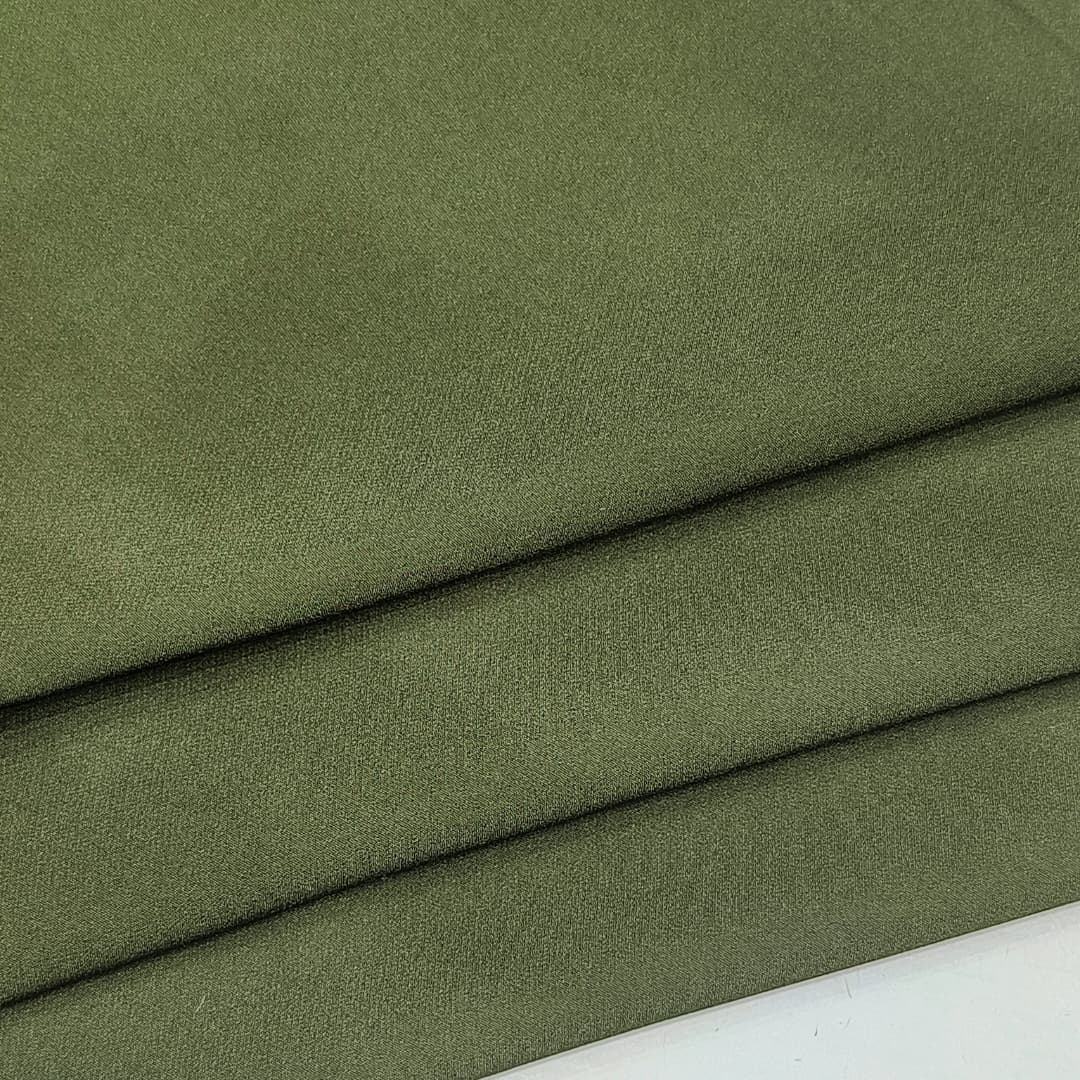
Aesthetic requirements often dictate material selection in high-end fashion. The double layer four way stretch crepe fabric offers a sophisticated solution for formalwear and evening attire. Crepe yarns are highly twisted before weaving, resulting in a distinct, pebbled texture with a matte finish. This texture diffuses light, creating a rich visual depth that flatters the wearer.
When applied to a double-layer stretch construction, crepe fabric achieves a remarkable drape. It possesses enough weight to fall elegantly without clinging to the body. This makes it ideal for structured dresses, women's suiting, and wide-leg trousers. The inherent wrinkle resistance of the highly twisted yarns ensures the garment looks pristine even after hours of wear or travel. Designers no longer have to choose between a formal aesthetic and functional comfort.
Customization drives the athleisure and team sports markets. Brands require textiles that accept complex, vibrant graphics without compromising performance. A printed four way stretch polyester spandex fabric serves as the optimal canvas for dye-sublimation and digital printing techniques. The polyester base readily absorbs sublimation inks, permanently bonding the color to the fibers at high temperatures.
Printing on stretch fabrics introduces specific challenges. Grinning occurs when a printed fabric is stretched, revealing the unprinted white elastane fibers beneath the surface. Double-layer constructions mitigate this by allowing deeper ink penetration on the face layer while the backing layer maintains structural opacity. Evaluating colorfastness under tension is a mandatory quality control step for any custom sportswear brand. You must stretch the printed strike-off to 50% extension and check for image distortion or fiber grinning.
The choice between nylon and polyester as the primary structural fiber significantly impacts the final garment's performance, feel, and application. Both are synthetic polymers, but their molecular structures dictate different strengths on the field.
Performance Metric | Nylon-Based Stretch Fabric | Polyester-Based Stretch Fabric |
|---|---|---|
Abrasion Resistance | Superior. Highly resistant to friction, making it ideal for tactical gear and equestrian wear. | Moderate. Sufficient for general activewear but may pill under heavy friction. |
Hand-Feel | Softer, smoother, and often described as having a cool touch against the skin. | Slightly crisper texture, though advanced microfibers have significantly improved softness. |
Moisture Management | Absorbs slightly more water, which can delay drying times in heavy sweat conditions. | Highly hydrophobic. Repels water and dries exceptionally fast. |
Printability | Difficult to sublimate. Requires complex acid dyeing processes for vibrant colors. | Excellent for dye-sublimation. Holds crisp, vibrant prints perfectly. |
UV Resistance | Prone to fading and degradation under prolonged direct sunlight. | Highly resistant to UV degradation. Ideal for outdoor and marine applications. |
Environmental compliance is a strict requirement for premium brands. The textile industry is shifting toward sustainable inputs to reduce reliance on virgin petrochemicals. Recycled polyester (rPET), derived from post-consumer plastic bottles, and regenerated nylon, created from discarded fishing nets and industrial waste, are now standard offerings in high-end stretch fabrics.
Sourcing teams must verify these claims through recognized certifications. The Global Recycled Standard (GRS) ensures the traceability of recycled inputs from the waste collector to the final fabric mill. Furthermore, OEKO-TEX® Standard 100 and bluesign® certifications guarantee that the fabric has been manufactured without harmful chemicals. This ensures safety for both the consumer and the factory workers handling the materials. Specifying these certifications on your tech pack prevents unauthorized substitutions during bulk production.
All elastic garments eventually suffer from elastic fatigue. This is the point where the spandex fibers permanently stretch and lose their recovery capabilities. The double-layer architecture significantly delays this degradation. By sandwiching the elastane yarns between dense layers of rigid synthetic fibers, the fabric limits the maximum extension point. The rigid fibers act as a physical brake, preventing the elastane from stretching past its breaking point. This mechanical synergy extends the usable lifecycle of the garment far beyond that of standard single-layer knits. When subjected to cyclic loading tests, double-layer wovens maintain their modulus of elasticity for thousands of stretch cycles.
Adding a second layer of fabric inherently increases thermal retention. While beneficial for winter outerwear, it presents a challenge for high-summer activewear. Textile engineers mitigate heat trapping by manipulating the weave structure. The inner layer is often woven with a looser, more open grid pattern to allow body heat to escape. The outer layer utilizes a tighter weave to block wind. This differential density facilitates active breathability. It allows the garment to regulate micro-climates effectively during intense physical exertion. You can measure this efficiency using CFM (Cubic Feet per Minute) ratings to balance wind resistance with air permeability.
Pilling occurs when loose fibers tangle together on the fabric's surface due to friction. Knitted stretch fabrics are notoriously prone to pilling because their looped structure exposes many fiber ends. Woven double-layer fabrics combat this through high-twist yarns and dense warp/weft intersections. The smooth, tightly packed surface leaves very few loose fibers available to tangle. In Martindale abrasion tests, these fabrics consistently outlast standard knits. They maintain a smooth, professional appearance even after 50,000 rub cycles in high-friction areas like the inner thighs or underarms.
Proper maintenance dictates the longevity of any stretch garment. Elastane is highly sensitive to extreme heat and harsh chemicals. Brands must provide clear, accurate care labels to prevent premature degradation. High-heat drying breaks down the elastic core, leading to a brittle, sagging fabric. Fabric softeners coat the synthetic fibers, destroying their moisture-wicking capabilities and potentially weakening the adhesives in bonded double layers.
Wash in cold water using a gentle cycle to protect the elastane core.
Avoid chlorine bleach and heavy-duty enzymatic detergents that degrade synthetic polymers.
Line dry or tumble dry on the lowest heat setting to prevent shrinkage and elastic fatigue.
Never iron directly on high heat; use a pressing cloth or industrial steamer to remove wrinkles.
Skip silicone-based fabric softeners to maintain the integrity of moisture-wicking finishes.
The physical weight of the fabric dictates its seasonal appropriateness. Double-layer constructions naturally possess a higher GSM (grams per square meter), typically ranging from 250g/m² to 400g/m². This density provides the coveted structure and opacity, but it limits the fabric's use in ultra-lightweight summer collections. Designers must carefully evaluate the drape. A 350 GSM fabric will hold a sharp crease for tailored trousers but will feel overly stiff and restrictive if used for a lightweight running shirt. Matching the GSM to the specific garment application is a mandatory step in the design phase to avoid creating a garment that feels like armor.
Manufacturing high-stretch, dense fabrics requires specialized factory floor protocols. Standard sewing techniques will result in catastrophic garment failure. The density of the double layer increases the risk of needle cutting. This happens when a dull or improperly sized needle severs the elastane yarns during stitching, causing holes to form along the seam line after the first wash.
Seam puckering is another frequent issue. If the fabric is stretched unevenly as it feeds through the sewing machine, the seam will ripple once the tension is released. Factories mitigate these risks by implementing specific strategies on the production line.
Utilizing SUK ballpoint needles that slide between yarns rather than piercing them.
Employing walking foot or differential feed sewing machines to ensure both layers feed evenly without stretching.
Using stretch threads, such as wooly nylon, in the loopers of overlock machines to allow the seam to stretch with the fabric.
Grading seams at heavy intersections to reduce bulk and prevent skipped stitches.
Adjusting the stitches per inch (SPI) to balance seam strength with elasticity.
Premium performance commands a premium price. The complex weaving process, higher raw material usage, and specialized dyeing requirements make double-layer textiles significantly more expensive to produce than single-layer commodities. Procurement teams must justify this upfront expenditure by analyzing the long-term reduction in return rates. Garments made from these materials experience drastically lower failure rates regarding seam popping or loss of shape.
Sourcing logistics also require careful planning. Mills generally impose higher Minimum Order Quantities (MOQs) for custom dye lots of double-layer fabrics. The loom setup and dyeing processes are highly resource-intensive. Lead times are frequently longer due to the complex finishing required to stabilize the elastane. Brands must build these extended timelines into their production calendars to avoid costly air-freight upgrades or missed delivery windows.
Double-layer four-way stretch fabric stands as the definitive choice for brands that refuse to compromise between structural integrity and dynamic mobility. By leveraging complex weave architectures and precise elastane integration, this textile solves the historical failures of traditional stretch materials. It delivers unparalleled opacity, exceptional shape recovery, and robust durability. While it requires specialized handling on the factory floor and demands careful seasonal weight consideration, the resulting garments offer a premium consumer experience.
To successfully integrate this material into your next production run, execute the following steps:
Request physical swatches of both true double-weave and bonded variations to compare drape, weight, and hand-feel directly.
Conduct in-house stretch-and-recovery wash testing on prototype yardage to verify shrinkage tolerances before approving bulk production.
Audit your manufacturing partner's capabilities to ensure they possess the specialized machinery and technical expertise required to sew high-tension, dense fabrics.
Establish clear tolerance levels for dye lot consistency, as double layers can sometimes exhibit slight face-to-back color variations.
Specify exact needle types and thread tensions in your tech packs to prevent needle cutting and seam puckering on the factory floor.
A: Two-way stretch fabric only stretches in one direction, typically horizontally across the crosswise grain (weft). Four-way stretch fabric contains elastane in both the warp (lengthwise) and weft (crosswise) directions. This allows the material to stretch and recover dynamically in all directions, providing maximum ergonomic mobility for the wearer.
A: Woven double-layer fabrics are created simultaneously on a loom, interlocking two layers with binder threads into one integrated piece. Bonded fabrics take two separate, pre-made textiles and glue them together using heat and adhesives. While bonding allows for custom layering, it carries a risk of delamination over time.
A: Yes, all stretch fabrics experience some shrinkage due to the relaxation of elastane fibers when exposed to heat and water. Expected shrinkage tolerances typically range from 2% to 5%. Manufacturers must pre-shrink the fabric during the finishing process, and pattern makers should account for residual shrinkage in their designs.
A: Breathability depends heavily on the fiber blend and weave structure. Polyester blends wick moisture effectively, while open-grid inner weaves allow body heat to escape. However, the inherent density of two layers makes it less breathable than a single-layer mesh or lightweight knit, requiring careful seasonal application.
A: Preventing seam popping requires the seam to stretch as much as the fabric itself. Factories achieve this by using stretch threads like wooly nylon in the loopers, employing specific stitch types like zig-zag or 4-thread overlock seams, and adjusting the sewing machine's differential feed to prevent uneven tension.
A: For structured, opaque tailored bottoms and trousers, the industry benchmark typically falls between 280 and 350 GSM. This weight provides enough density to prevent bagging at the knees and seat while maintaining a sharp, professional drape that does not feel overly restrictive.
A: Yes, sublimation is highly effective on blends with a high polyester content. The heat transfer process bonds the ink directly to the polyester fibers. This results in vibrant, permanent designs without compromising the fabric's stretch, recovery, or breathability, making it ideal for custom sportswear.
