

close
Choose Your Site
Global
Social Media


Views: 0 Author: Site Editor Publish Time: 2026-02-02 Origin: Site


In the world of fashion and textile manufacturing, selecting the right fabric is crucial to the final product’s quality, comfort, and appearance. Among the popular choices for suits, TR suiting fabric and cotton are two fabrics frequently compared by designers, tailors, and consumers alike. Understanding the differences between these materials is essential for making an informed choice that suits your specific needs.
This article will provide an in-depth comparison between TR suiting fabric and cotton, focusing on core factors such as dimensional stability, crease recovery rate, tailoring ease, and the ability to maintain a professional silhouette. Additionally, we’ll incorporate relevant data, product comparisons, and industry insights that align with Google user search intent, ensuring a comprehensive resource for anyone interested in these fabrics.
For those interested in high-quality TR suiting fabric, Kingsen International stands as a top manufacturer and supplier, offering a wide range of textile solutions with reliable quality and competitive pricing.
TR suiting fabric is a blend primarily composed of polyester (Terylene) and rayon. This combination aims to merge the best qualities of synthetic and natural fibers: polyester’s strength and durability with rayon’s softness and breathability. The fabric is often chosen for its affordability, wrinkle resistance, and ease of maintenance, making it a popular choice for everyday suits and uniforms.
Cotton is a natural fiber harvested from the cotton plant. Known for its breathability, softness, and natural feel, cotton has been used in textile production for centuries. It’s widely used in casual wear, formal shirts, and sometimes in suiting fabrics, especially in blends. Pure cotton suits provide a comfortable, breathable option but tend to require more maintenance than synthetic blends.
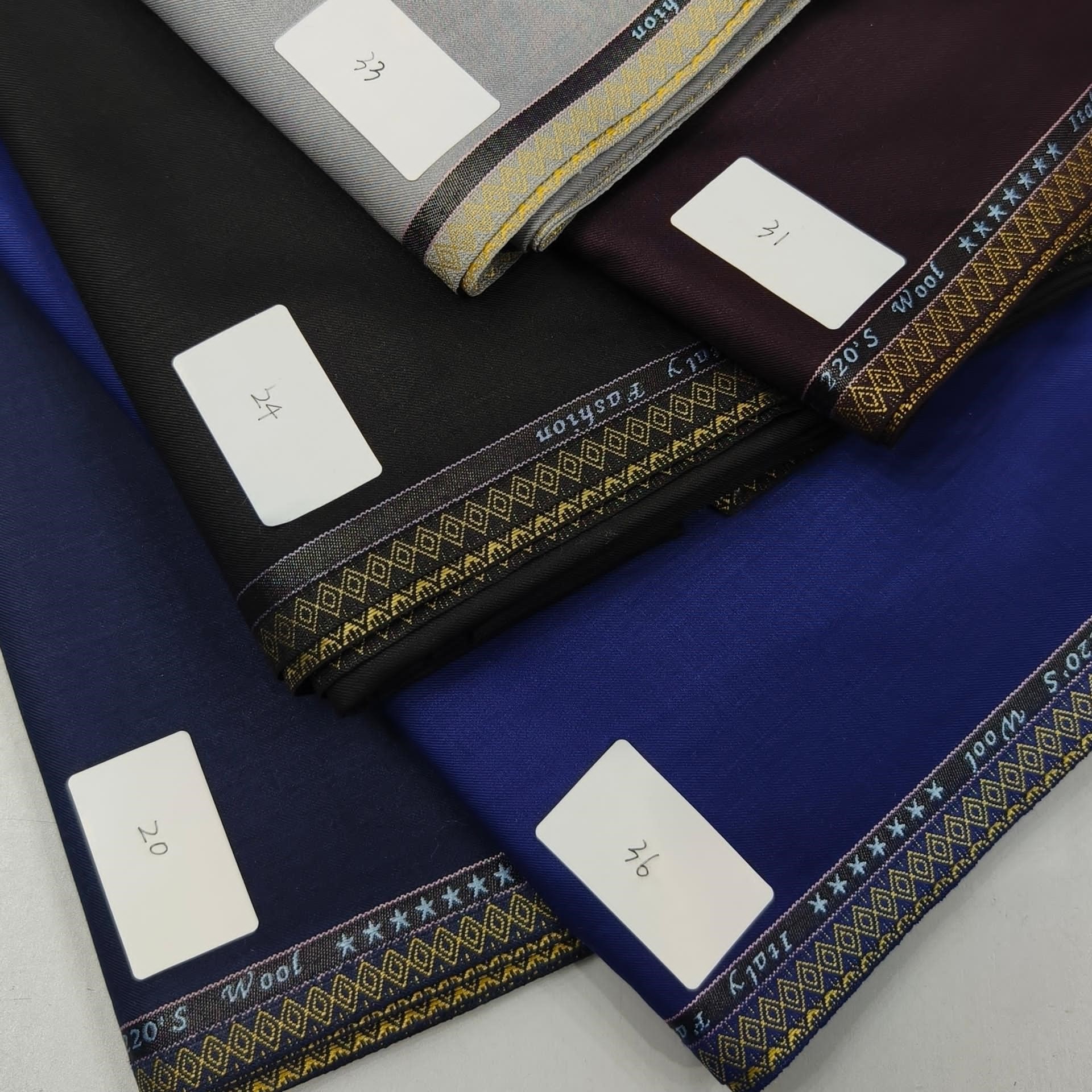
Dimensional stability refers to a fabric’s ability to retain its original dimensions (length and width) after washing, drying, or prolonged use.
| Fabric Type | Dimensional Stability | Explanation |
|---|---|---|
| TR Suiting Fabric | High | Polyester fibers provide excellent resistance to shrinkage and stretching, keeping suits well-fitted over time. |
| Cotton | Moderate to Low | Cotton tends to shrink, especially when washed improperly, which can alter the fit of a garment. |
For professionals needing suits that maintain their size and fit after multiple uses and washes, TR suiting fabric is advantageous due to its higher dimensional stability.
The crease recovery rate measures how well a fabric recovers from wrinkles and creases, crucial for maintaining a neat appearance throughout the day.
| Fabric Type | Crease Recovery Rate | Explanation |
|---|---|---|
| TR Suiting Fabric | Excellent | The synthetic polyester component allows the fabric to spring back from wrinkles quickly, making it low-maintenance. |
| Cotton | Moderate | Cotton creases easily and can be harder to smooth out without ironing. |
If you seek a fabric that keeps a sharp look with minimal effort, TR suiting fabric scores highly due to its superior crease recovery rate.
The ease with which a fabric can be cut, sewn, and shaped directly affects the suit’s final fit and comfort.
| Fabric Type | Tailoring Ease | Explanation |
|---|---|---|
| TR Suiting Fabric | Good | Its blend balances pliability with strength, making it relatively easy to tailor without fraying or distortion. |
| Cotton | Excellent | Cotton is highly breathable and pliable, making it easy to sew and ideal for intricate tailoring, though it may require stabilization treatments to avoid distortion. |
Both fabrics offer favorable tailoring ease, but cotton’s natural softness provides an edge for detailed craftsmanship, while TR suiting fabric provides consistency for mass production.
The ability of the fabric to hold a professional silhouette—a clean, crisp, and structured appearance—is essential for formal wear.
| Fabric Type | Professional Silhouette | Explanation |
|---|---|---|
| TR Suiting Fabric | Excellent | The blend’s durability and structure support tailored lines and crisp edges, maintaining a polished look. |
| Cotton | Moderate | Cotton’s softer drape is comfortable but can appear less structured without additional interfacing or treatments. |
For corporate settings requiring sharp, defined suits, TR suiting fabric provides a better balance of style and functionality.
| Feature | TR Suiting Fabric | Cotton |
|---|---|---|
| Composition | Polyester-rayon blend | 100% natural fiber |
| Dimensional Stability | High - resists shrinkage and stretching | Moderate - prone to shrinkage |
| Crease Recovery Rate | Excellent - wrinkle-resistant | Moderate - wrinkles easily |
| Tailoring Ease | Good - durable, easy to handle | Excellent - soft, pliable |
| Professional Silhouette | Maintains sharp, structured look | Softer silhouette, less formal |
| Maintenance | Low-maintenance, machine washable | Requires careful washing and ironing |
| Breathability | Moderate - rayon adds comfort | High - naturally breathable |
| Cost | Cost-effective | Generally higher due to natural fibers |
The synthetic polyester fibers in TR suiting fabric provide outstanding dimensional stability, making suits resistant to shrinkage and shape distortion during washing. This is particularly beneficial for professionals who wear suits regularly and want their garments to maintain fit and appearance over time.
In contrast, cotton’s natural fibers are prone to shrinkage, especially if washed improperly. Though cotton is breathable and comfortable, its dimensional stability can be a challenge unless special finishing treatments are applied.
The crease recovery rate of TR suiting fabric is one of its major selling points. Polyester fibers allow the fabric to bounce back from wrinkles, keeping suits looking crisp with minimal ironing. This makes TR suiting fabric ideal for daily wearers who want to minimize garment upkeep.
Cotton, on the other hand, wrinkles more readily and generally requires frequent ironing to maintain a smooth look. While cotton is preferred for casual comfort, this wrinkle propensity can be a drawback in professional contexts.
Tailors appreciate cotton for its softness and ease of handling, enabling intricate cuts and designs. However, TR suiting fabric strikes a good balance by being durable yet pliable enough to tailor efficiently, especially in high-volume manufacturing contexts.
The professional silhouette offered by TR suiting fabric is typically sharper and more defined than cotton. This is due to the synthetic fibers’ ability to hold structure and resist deformation, making it preferable for formal suits where appearance is paramount.
Modern consumers increasingly demand fabrics that offer both comfort and performance. While cotton remains a top choice for breathability, manufacturers are innovating with TR suiting fabric blends to improve moisture wicking, thermal regulation, and stretchability.
Kingsen International, a trusted fabric supplier with a rich heritage since 2011, leads in producing high-quality TR suiting fabric that incorporates advanced fiber technology. Their extensive facilities in Foshan, Guangdong, along with branches in Shaoxing and Nigeria, enable consistent production of fabrics that meet evolving market standards for both comfort and durability.
The key advantage of TR suiting fabric is its dimensional stability and superior crease recovery rate, which help maintain a professional appearance with minimal maintenance.
Cotton offers excellent tailoring ease due to its softness, but TR suiting fabric provides a balanced mix of pliability and durability, suitable for consistent production without compromising fit.
TR suiting fabric holds a sharper, more structured silhouette compared to cotton, making it the preferred choice for formal suits.
TR suiting fabric is easier to maintain, often being machine washable and wrinkle-resistant, whereas cotton requires more careful laundering and frequent ironing.
Yes, the rayon component in TR suiting fabric enhances breathability and moisture absorption, making it suitable for warm environments, though cotton is naturally more breathable.
Choosing between TR suiting fabric and cotton ultimately depends on the intended use, maintenance preferences, and desired appearance of the suit. For those prioritizing durability, low maintenance, and a professional silhouette, TR suiting fabric is an excellent choice. Meanwhile, cotton remains unmatched in natural breathability and softness but demands more care.
Kingsen International’s expertise in manufacturing high-quality TR suiting fabric offers customers access to fabrics that meet stringent standards for dimensional stability, crease recovery, and aesthetic appeal. Their commitment to innovation and quality makes them a trusted partner for textile buyers worldwide.
By understanding these factors, you can confidently select the fabric that best aligns with your tailoring needs and lifestyle preferences.
