

close
Choose Your Site
Global
Social Media


Views: 0 Author: Site Editor Publish Time: 2026-10-26 Origin: Site


The technical apparel and high-performance fashion markets demand textiles that deliver uncompromising omnidirectional mobility without sacrificing structural integrity or opacity. Specifying the wrong stretch fabric leads to catastrophic garment failure, including poor shape retention, seam slippage, or inadequate durability. When athletes push their gear to the limit, the material must respond dynamically and recover instantly. Buyers and technical designers must understand the underlying manufacturing mechanics to distinguish between low-grade stretch materials and premium double-layer constructions. Relying on basic visual inspections often results in sourcing substandard yardage that bags out after a single wash cycle. This guide deconstructs the manufacturing process of Double-Layer Four-Way Stretch Fabric, establishing the technical criteria necessary to evaluate supplier quality, mitigate production risks, and make informed wholesale purchasing decisions. We will examine yarn selection, knitting mechanics, and the finishing protocols that lock in elastane memory.
Structural Integrity: Double-layer construction utilizes specialized double-knit machinery to interlock two distinct fabric faces, providing superior opacity, durability, and shape retention compared to single-layer alternatives.
Omnidirectional Recovery: True four-way stretch relies on precise elastane (spandex) insertion across both the warp (lengthwise) and weft (crosswise) grains, requiring rigorous heat-setting during finishing.
Application Specificity: Variations like polyester spandex double layer crepe fabric offer unique textural and draping properties, requiring specific evaluation metrics for stretch modulus and recovery rates.
Sourcing Imperatives: Procuring wholesale four way stretch polyester spandex fabric requires vetting suppliers on strict technical data, including ASTM/ISO testing for stretch recovery, colorfastness, and shrinkage.
You must clarify the mechanical difference between stretch types on the cutting room floor. Two-way stretch typically only extends across the crosswise grain. You pull it from selvedge to selvedge, and it gives. Pull it parallel to the selvedge, and it remains rigid. Four-way stretch extends and recovers on both the crosswise and lengthwise grains. This dual-direction elasticity provides superior movement. It allows garments to contour perfectly to the human body in motion. During a deep squat, human skin stretches up to 40 percent across the knee and seat. If your fabric lacks lengthwise stretch, the garment will pull down on the waistband and restrict the wearer.
Industry terminology discrepancies often cause sourcing errors. Some commercial pattern makers confusingly label four-way stretch as two-way. Legacy suppliers sometimes use outdated naming conventions based on older loom capabilities. You must establish a physical testing protocol. Verify true omnidirectional recovery before purchasing bulk yardage. Pull the fabric horizontally and vertically. Measure the snap-back speed and dimensional return. Do not rely solely on the supplier's marketing description.
True four-way stretch is mandatory for high-mobility garments. Bike shorts, swimwear, and technical activewear require this material. It prevents fit failures during athletic movement. Bagging at the knees or elbows ruins garment aesthetics. Blowouts at high-stress seams destroy consumer trust. Omnidirectional stretch absorbs kinetic energy safely. When a runner lunges, the fabric elongates across the joint and instantly snaps back to its original dimensions.
The architecture of this fabric is highly engineered. Two interconnected layers are knitted simultaneously. This is not two separate fabrics glued or laminated together. The yarns interlock during the actual knitting process. This creates a unified textile with distinct face and back properties. The internal binding yarns hold the layers securely, preventing delamination during heavy wear and aggressive laundering.
This construction delivers significant performance benefits that single-layer knits cannot match.
It increases the grams per square meter (GSM) without adding excessive bulk, typically hitting the 250 to 350 GSM sweet spot for premium activewear.
The density provides inherent opacity, creating a reliable squat-proof fabric that consumers demand.
It prevents the sheer-out effect that plagues single-layer knits under high tension.
It offers superior structural drape, hiding body contour imperfections and providing a smoothing effect.
You can engineer different properties on each side of the textile. The face can feature a smooth, aerodynamic exterior designed to resist abrasion and pilling. The back can utilize a textured interior for moisture management and skin comfort. This dual-functionality eliminates the need for separate linings. It reduces overall garment weight. It also simplifies the cut-and-sew assembly process by removing an entire layer of fabric from the marker.
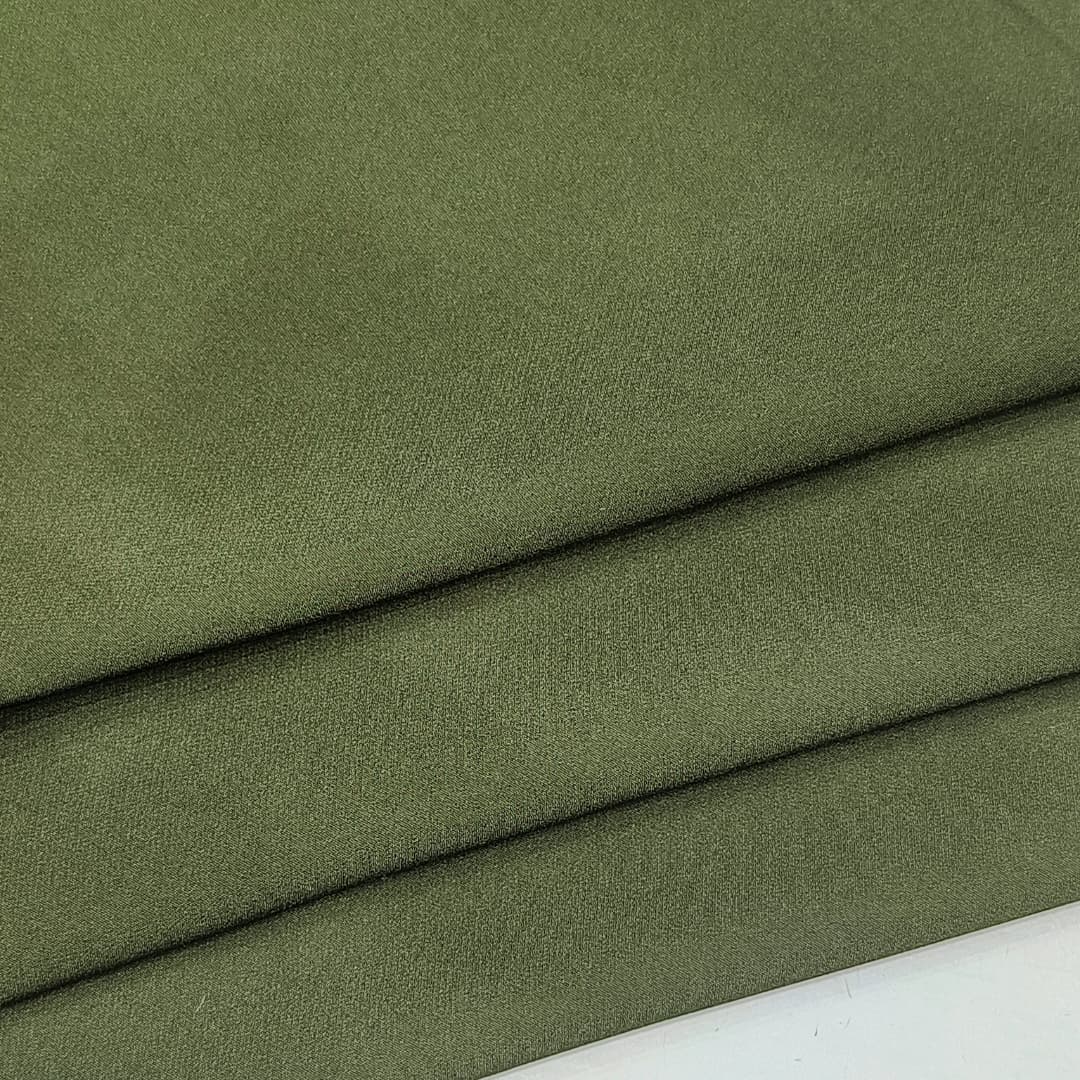
Synthetic polymers play a foundational role in modern textile engineering. Blending polyester provides exceptional durability and moisture management. Elastane delivers the essential elasticity required for movement. The quality of the raw polymer chips dictates final performance. Extruding these chips into uniform filaments requires precision. Inconsistent filament thickness causes weak points in the fabric, leading to premature rupture under stress.
Synthetic polymers outperform natural fiber blends in this specific category. Cotton or bamboo blends struggle in double-layer constructions. Synthetic blends dominate because they offer superior moisture wicking. They retain color vibrancy through intense wash cycles. Their structural stability prevents the fabric from sagging over time. Natural fibers absorb sweat, become heavy during exercise, and lose their elastomeric memory much faster than synthetic counterparts.
Optimal spandex ratios typically range from 10 percent to 30 percent. Higher percentages yield greater compression and recovery, ideal for medical-grade shapewear or high-impact athletic gear. Lower percentages offer a softer drape and lighter hold for lounge apparel. Denier choices directly impact the final fabric weight. Thicker yarns increase the stretch modulus. Proper four way stretch fabric construction demands exact yarn specifications. You cannot swap a 40-denier elastane for a 20-denier elastane without completely altering the garment's fit profile.
You must differentiate between knit and woven stretch materials. Four-way stretch can be engineered into woven fabrics. This requires inserting elastane into both the warp and weft during the weaving process. However, double-layer constructions are predominantly achieved through advanced knitting. Knitting loops the yarns together, creating inherent mechanical stretch. This mechanical action amplifies the chemical stretch of the elastane, resulting in massive elongation capabilities.
Double-knit circular machines are the industry standard for this production. Specialized warp-knitting equipment can also create this structure. These machines operate at high speeds under strict tension controls. The gauge of the machine determines the fabric's fineness. Higher gauge machines, such as 32-gauge or 36-gauge, produce smoother, denser textiles with excellent opacity. Lower gauge machines create more textured, open fabrics.
The dial and cylinder needle configuration is the mechanical heart of the process. It allows two layers of yarn to interlock simultaneously. The machine feeds elastane into both directions during knitting. Needles hook and pull the yarns in precise sequences. This synchronization prevents dropped stitches. It ensures the binding yarns connect the layers invisibly. If the tension on the elastane feed fluctuates even slightly, the fabric will pucker and fail quality control inspections.
The high-temperature dyeing process is highly technical. Polyester and spandex blends require specific thermal parameters to accept color evenly. Jet dyeing machines circulate the fabric through pressurized dye baths. The temperature often reaches 130 degrees Celsius. This forces the disperse dyes into the polyester fibers. Careful pH control prevents the elastane from degrading during this aggressive chemical bath.
The stenter frame heat-setting process follows the dyeing stage. Locking the spandex memory at specific temperatures is non-negotiable. The fabric passes through multiple heated zones under controlled tension. This stabilizes the molecular structure of the synthetic yarns. It dictates the final width and weight of the textile. The glass transition temperature of the polymers must be reached to set the fabric's permanent dimensions.
Skipping proper heat-setting causes severe manufacturing issues. It leads to unpredictable shrinkage during consumer washing. It destroys the maximum recovery percentage. The fabric will stretch out and never return to size. Heat-setting guarantees dimensional stability for the cutting room. It ensures the garment fits exactly as designed after assembly.
Manufacturing Stage | Standard Temperature Range | Primary Objective |
|---|---|---|
Disperse Dyeing (Polyester) | 125°C - 135°C | Force dye penetration into synthetic fibers |
Pre-Heat Setting | 180°C - 195°C | Stabilize greige goods before dyeing |
Final Stenter Frame Heat-Setting | 175°C - 190°C | Lock elastane memory and finalize fabric width |
Sublimation Printing | 195°C - 205°C | Vaporize ink for molecular bonding |
The crepe variation introduces unique tactile properties to the textile market. Highly twisted yarns create a textured, pebbled surface. Specific knitting tensions enhance this dimensional effect. The resulting fabric feels sophisticated and architectural. It breaks away from the traditional smooth athletic aesthetic. The double-layer construction maintains the necessary opacity while delivering a premium hand-feel.
Evaluate the specific use cases for this material. It is ideal for structured dresses and premium athleisure. High-end suiting applications benefit from its unique drape. Wrinkle resistance is prioritized alongside extreme mobility. Designers use polyester spandex double layer crepe fabric for travel collections. It unpacks flawlessly after long transit times, requiring zero steaming or pressing before wear.
The crepe texture requires careful handling during production. The twisted yarns can snag if machinery is poorly maintained. Cutting blades must remain exceptionally sharp. Dull blades will fray the textured surface and cause edge rolling. Pressing temperatures must be calibrated carefully on the finishing line. Excessive heat can flatten the signature pebbled texture permanently, ruining the fabric's primary selling point.
Analyze the primary printing methodologies for this textile. Sublimation and direct digital printing are the dominant techniques. Sublimation uses heat to transfer dye from paper to fabric. The dye turns into gas and bonds with the polyester at a molecular level. Direct digital printing applies ink directly onto the fabric surface using specialized print heads. Both methods offer vibrant, high-resolution graphics.
You must understand the technical trade-offs involved in these processes. High-heat sublimation can occasionally impact the elastane's recovery. Manufacturers must strictly control the calendar press temperatures. If the heat exceeds safe limits, the spandex melts internally. This destroys the four-way stretch capabilities entirely. The fabric becomes rigid, brittle, and prone to cracking under tension.
Proper thermal management preserves the fabric's stretch properties. Always request strike-offs before approving bulk production. Test the printed swatches against the unprinted greige goods. Ensure the stretch modulus remains identical. Sourcing printed four way stretch polyester spandex fabric requires rigorous quality assurance. You must verify that the ink penetration does not compromise the interlocking binding yarns of the double-layer structure.
Stretch Modulus measures the force required for elongation. It dictates how compressive the garment will feel on the body. High modulus means the fabric resists stretching strongly, providing a locked-in feel. Low modulus means the fabric stretches easily with minimal effort, offering a relaxed fit. You must match the modulus to the garment's intended function. Compression tights need high modulus. Lounge pants need low modulus.
Recovery Percentage tracks dimensional return after sustained stretching. The target recovery must exceed 95 percent. Anything less results in permanent bagging over time, especially around the knees and seat. Pilling resistance ensures long-term visual appeal. Friction during wear causes loose fibers to ball up on the surface. High-quality double-layer fabrics resist this abrasion effectively due to tightly spun yarns and optimal twist multipliers.
Colorfastness to perspiration and washing is mandatory. Athletic garments endure harsh chemical environments. Sweat and frequent laundering degrade poor-quality dyes. Test the fabric against standardized ISO or AATCC methods. Ensure the color does not bleed onto lighter fabrics during a heavy workout. Maintain visual integrity throughout the garment's lifecycle.
Performance Metric | Standard Test Method | Target Success Criteria |
|---|---|---|
Stretch and Recovery | ASTM D4964 | >95% recovery after 1 minute of sustained tension |
Seam Slippage | ASTM D434 | No fiber separation under 40 lbs of applied force |
Pilling Resistance | ASTM D3512 | Grade 4 or 5 after 30 minutes of random tumble |
Colorfastness to Washing | AATCC 61 | Grade 4 minimum color retention across 50 cycles |
Bursting Strength | ASTM D3786 | Minimum 100 psi resistance before fabric rupture |
Needle cutting or laddering occurs frequently during the sewing process. High spandex content increases this specific risk exponentially. Standard sharp needles pierce and sever the elastane fibers. This causes runs to propagate through the knitted structure. It ruins the garment before it even leaves the factory floor. You must adapt your sewing machinery accordingly to handle dense double knits.
Specify ballpoint needles to separate fibers instead of cutting them. Maintain appropriate thread tension across all sewing stations. Tight tension restricts the fabric's natural stretch. This causes the thread to snap during wear. Use specialized seam types like flatlock or overlock. These stitches elongate in tandem with the fabric. Adjust the differential feed on your sewing machines to prevent the fabric from stretching out while passing under the presser foot.
Seam slippage is another major risk in double-layer constructions. The layers can shift independently if improperly bound during sewing. Require suppliers to provide seam slippage test reports. ASTM D434 is the standard testing protocol for this issue. Ensure your stitch density accommodates the fabric's thickness. Proper seam engineering prevents catastrophic blowouts during high-stress movements.
Demand Technical Data Sheets (TDS) from all potential mills. These documents outline the exact physical properties of the textile. Do not accept vague descriptions of stretch or weight. Oeko-Tex certifications verify safety and environmental standards. They ensure the fabric is free from harmful chemicals. This protects both factory workers and end consumers from toxic exposure.
Batch-to-batch consistency reports ensure uniform production over time. Color matching must remain precise across different dye lots. Fabric weight cannot fluctuate between seasonal orders. Evaluate Minimum Order Quantities (MOQs) against your production lead times. Custom dye lots require longer planning and higher minimums. Greige goods availability speeds up delivery significantly.
You must audit the supplier's quality control infrastructure. Do they inspect every roll on a light box using the 4-point inspection system? Do they flag defects accurately before shipping? Procuring wholesale four way stretch polyester spandex fabric demands rigorous vetting. Poor supplier selection leads to massive production delays. It forces you to scrap entire cutting tickets when the fabric fails on the sewing floor.
Raw elastane quality impacts the final performance of the yardage. Branded elastane fibers perform differently than generic spandex alternatives. Premium fibers offer superior memory and chemical resistance. Generic fibers often degrade faster under UV light or chlorine exposure. You must balance these material inputs against your performance requirements. High-end activewear requires premium inputs to survive rigorous use.
The hidden cost of cheap stretch fabric is severe. Garment bagging leads to exceptionally high consumer return rates. Sheer-out during movement destroys brand trust instantly. Degradation after washing ruins your reputation for quality. Saving a small amount on raw materials is dangerous. It often results in massive downstream financial losses when entire production runs are rejected by retailers.
Analyze the total yield of the fabric rolls. Cheaper fabrics often contain more flaws per yard. You must cut around these defects during production. This increases your fabric waste percentage significantly. A more expensive, defect-free roll often yields more garments per yard. Calculate your true material efficiency based on usable yardage, not just the invoice total.
To ensure your production run utilizes the highest quality double-layer four-way stretch fabric, execute the following directives immediately:
Request physical swatches and manually test omnidirectional stretch recovery against your baseline requirements.
Mandate comprehensive Technical Data Sheets from your mill to verify stretch modulus and recovery metrics before issuing a purchase order.
Conduct independent wash, stretch, and seam slippage testing using ASTM D434 standards on all sample yardage.
Specify ballpoint needles and high-elongation stretch threads for all cut-and-sew operations to prevent needle cutting.
A: Two-way stretch extends in one direction, usually crosswise. Four-way stretch extends and recovers both crosswise and lengthwise. This offers superior mobility and fit. Always physically test the grain yourself. Some legacy pattern makers confuse the terminology and mislabel fabrics.
A: Double-layer construction provides higher opacity and better structural drape. It increases durability significantly. It prevents the fabric from becoming sheer when stretched over the body. This makes it ideal for squat-proof activewear and premium structured garments.
A: The ideal range is typically between 10% and 30%. The exact percentage depends on the application. Light mobility garments require lower percentages. High-compression recovery garments require higher percentages to maintain their shape.
A: Yes, polyester-rich blends are ideal for sublimation printing. However, the heat process must be carefully managed. The manufacturer must control temperatures strictly. Excessive heat damages the spandex fibers and ruins the stretch recovery.
A: It is frequently used in high-end fashion and structured activewear. Travel apparel utilizes it heavily. It features a textured matte finish and excellent wrinkle resistance. The fabric provides a sophisticated drape while maintaining extreme mobility.
A: Use stretch threads like wooly nylon in the loopers. Utilize overlock or coverstitch machines for assembly. Ensure the stitch elasticity matches the fabric's stretch modulus. Always specify ballpoint needles to prevent cutting the elastane fibers.
